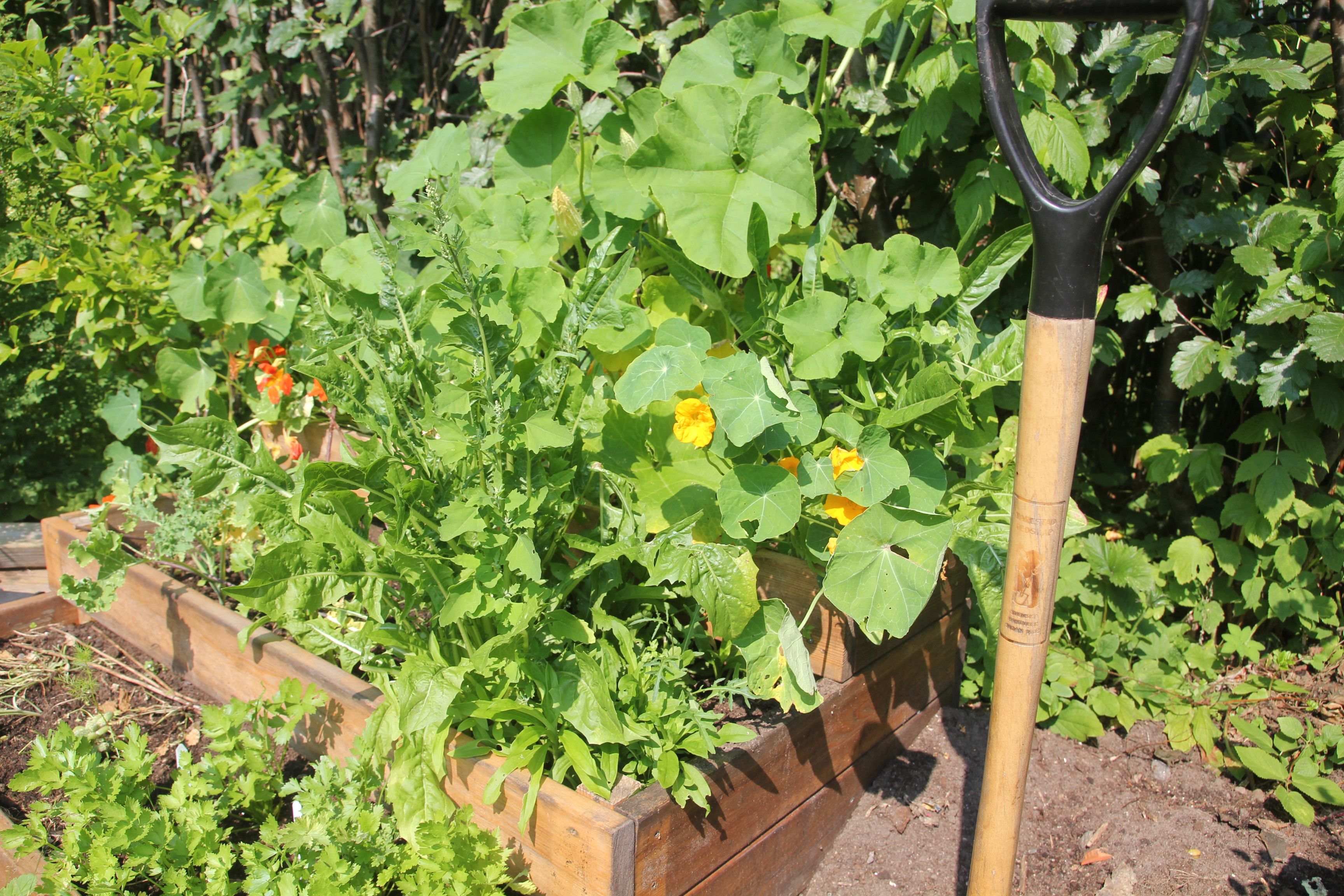
Raised beds have become one of the more practical options for urban food production in Canada. They work on compacted clay soils, contaminated lots, uneven ground, and concrete pads where in-ground planting isn't viable. That said, building one that actually performs through a Canadian growing season requires decisions that go beyond choosing a lumber species and filling it with bagged soil.
This guide focuses on the specific factors that affect raised bed performance in Canadian conditions — climate zone differences, local building material availability, frost timing, and soil composition — rather than treating all raised bed setups as interchangeable.
Choosing materials in a Canadian context
Lumber is the dominant material for raised beds in Canada, and the choice matters more than it might seem. Pressure-treated lumber using ACQ (alkaline copper quaternary) formulations has replaced the older CCA (chromated copper arsenate) products, and is generally considered acceptable for vegetable growing by most Canadian extension programs — though some gardeners choose to line beds with heavy polyethylene to create a barrier regardless.
Cedar versus other options
Western red cedar is the benchmark material for raised beds in British Columbia and parts of Alberta. It's naturally rot-resistant, relatively lightweight, and doesn't require treatment. The drawback is cost — cedar prices have risen substantially since 2020, and in Ontario or Quebec, sourcing it at reasonable cost is less straightforward than it was a decade ago.
Douglas fir or spruce-pine-fir (SPF) dimensioned lumber is cheaper and widely available at most Canadian hardware chains. Untreated SPF will typically last 4–7 years in contact with soil before significant deterioration begins, which is an acceptable lifespan for many growers. Galvanized corrugated metal beds have also become common — they last considerably longer, though they heat up faster in full sun, which affects root zone temperatures in July and August.
Minimum dimensions that work
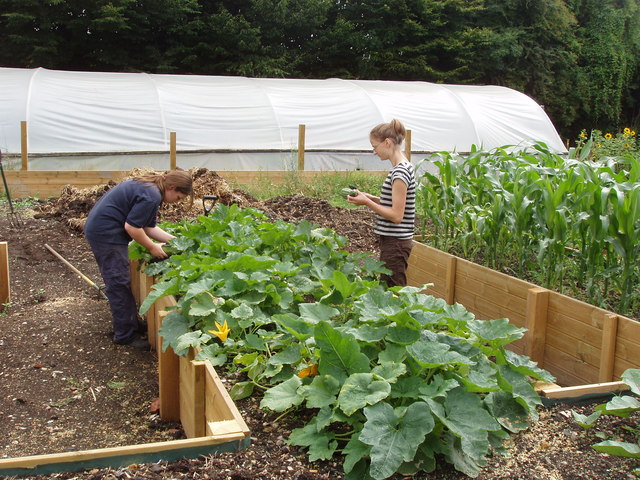
The standard recommendation of 30 cm (12 inches) depth is a starting point, not a ceiling. Most vegetable crops — tomatoes, squash, peppers, root vegetables — benefit from 35–45 cm of usable soil depth. Shallower beds work for greens, herbs, and radishes, but limit what you can grow reliably.
Width matters for access. A 120 cm (4 foot) bed is the standard maximum for adults with an average reach — anything wider means stepping into the bed, which defeats part of the purpose. Lengths can extend as far as the site allows, though beds beyond 3–4 metres become inconvenient to walk around.
The soil question — what actually goes inside
Bagged "garden soil" sold at Canadian hardware stores is generally inadequate as the primary fill for a raised bed. Most of it is low in organic matter, compacts quickly, and doesn't drain well. The functional approach used by experienced urban growers in Canada typically involves a layered fill:
- Bottom layer (optional): coarse wood chips, straw, or cardboard for drainage and slow decomposition
- Middle layer: a blend of topsoil and compost at approximately 60/40
- Top 10–15 cm: a mix of quality compost, aged manure, and perlite or coarse vermiculite for drainage
Municipal compost programs in major Canadian cities — Toronto's Green Bin program, Vancouver's organics collection, Calgary's blue cart system — produce finished compost that residents can sometimes access at reduced or no cost through depot programs. It's worth checking with local parks departments before purchasing bagged compost at retail prices.
Sourcing soil at scale
Bulk delivery is almost always more economical than bags for beds larger than 1 cubic metre. Most Canadian cities have soil and aggregate suppliers who deliver screened topsoil and triple-mix blends. Triple mix (typically a blend of topsoil, peat or compost, and black earth) is the standard residential raised bed fill in Ontario and is sold by the cubic metre. One cubic metre fills a 120 × 240 cm bed to 35 cm depth.
Frost windows and planting calendars by Canadian zone
Canada spans plant hardiness zones 0 through 8b along its populated southern band. The relevant range for most urban growers falls between zones 4 (inland Saskatchewan, northern Ontario) and 8 (coastal BC). Last frost dates vary significantly:
- Vancouver (Zone 8a): last frost typically around March 15 — one of the longest growing seasons in Canada
- Toronto (Zone 6a): last frost around May 9 — shorter than Vancouver but longer than Prairie cities
- Calgary (Zone 4a): last frost around May 22 — Prairie frost risk can extend into early June
- Montreal (Zone 5b): last frost around May 3 — similar to Toronto but with colder winters that affect perennial crops
- Ottawa (Zone 5a): last frost around May 11 — slightly longer frost windows than Montreal
These dates are averages and carry meaningful year-to-year variance. The Agriculture Canada plant hardiness zone map is the standard reference for Canadian growers, though micro-climate factors — proximity to water bodies, urban heat island effects, building shade — affect actual performance more than zone designations in dense cities.
Season extension in raised beds
Because raised beds drain and warm faster than in-ground plots, they can be planted earlier in spring — often 2–3 weeks ahead of in-ground dates. Covering beds with low tunnel hoops and floating row cover (Reemay or equivalent) allows planting cold-tolerant crops like spinach, kale, and peas well before last frost.
In fall, the same row cover extends harvest by 3–5 weeks in most Canadian zones. Cold frames — essentially a box with a transparent lid, often built from old windows — can push the season further, supporting greens through November in Toronto and through December in Vancouver.
Irrigation considerations in urban settings
Raised beds dry out faster than in-ground gardens, particularly in hot urban summers. Manual watering once or twice daily during peak heat is feasible for small setups but becomes difficult for multiple beds. Drip tape or soaker hose systems connected to a timer are the most consistent solution — they reduce water use compared to overhead watering and can be left running without constant attention.
Toronto, Vancouver, and most other Canadian municipalities permit residential rainwater collection in some form, though regulations on barrel size and runoff collection vary. A 200-litre rain barrel on a downspout can supply meaningful irrigation during average rainfall weeks, reducing dependence on municipal water for bed irrigation.
Common problems in the first growing season
The majority of raised bed failures in the first year trace back to three issues: inadequate soil depth, poor drainage, and underestimating watering frequency. A second common issue is placing beds in locations with less than 6 hours of direct sun, which limits what will produce reliably.
Slugs and cutworms are more prevalent in raised beds built directly on soil than in beds with hardware cloth barriers on the bottom. In areas with persistent wireworm pressure (common in beds established on former lawn), treating the soil mix or using a physical barrier at the base reduces crop loss in root vegetables.
Last updated: May 4, 2026. Information reflects current Canadian agricultural extension resources and municipal programs as of that date. Refer to local municipal websites for current program availability and compost depot access.